



2026 Mazda CX-30 vs. VW Taos: Two Compact SUVs, Two Different Drivers
Picking a compact SUV sounds simple until you actually start comparing models and realize that two vehicles in the same segment can feel like completely different propositions. The 2026 Mazda CX-30 versus the Volkswagen Taos is a perfect example. Both are well-built, right-sized SUVs with modern features and genuinely capable hardware. But the driver each one is designed for? That’s where things get interesting. If you’re already leaning toward the Mazda, browse our 2026 Mazda CX-30 inventory to see what’s currently in stock at Capistrano Mazda.
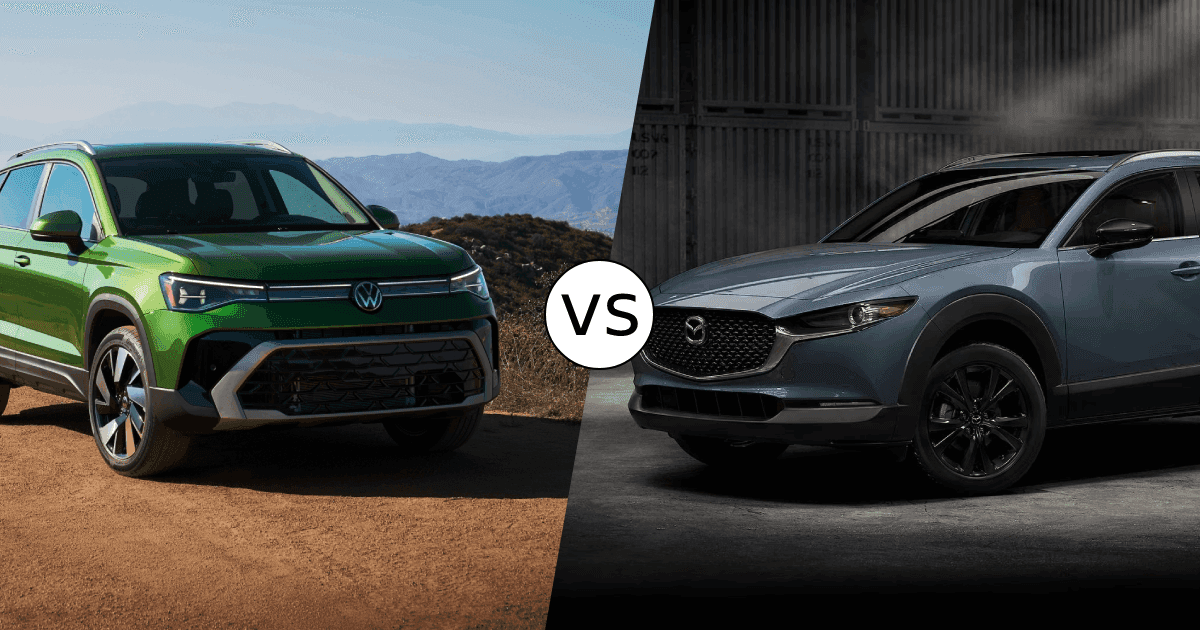
Two Compact SUVs, Two Very Different Philosophies
Specs alone don’t tell the whole story. What actually separates these two is the underlying philosophy each brand brings to the table.
Mazda builds the CX-30 around driver engagement. Every decision, from engine tuning to steering feel to interior material selection, is made with the person behind the wheel in mind. The result is a vehicle that feels more like a sport sedan wearing SUV clothes than a traditional utility hauler. Volkswagen takes the opposite approach with the Taos. Their focus lands squarely on flexibility, passenger comfort, and everyday practicality. It’s a vehicle designed to carry more, adapt more, and stress less.
Neither approach is wrong. They’re just aimed at different people, and figuring out which philosophy matches your lifestyle is really the whole ballgame.
Trim Lineups: How Each Brand Structures the Lineup
Pricing structure tells you a lot about a brand’s priorities. Both the CX-30 and the Taos offer four trim levels for 2026, but the way each brand builds those trims reflects what they value most.
2026 Mazda CX-30: Eight Trims Centered on Refinement
The 2026 CX-30 lineup spans eight trims: the 2.5 S, Select Sport, Preferred, Aire Edition, Carbon Edition, S Premium, Turbo Aire Edition, and Turbo Premium Plus. The base 2.5 S gets you a 10.25-inch display, wired Apple CarPlay and Android Auto, and Mazda’s full i-Activsense safety suite – a strong starting point at $25,975 before destination. Step up to the Select Sport and you gain meaningful comfort upgrades: 18-inch wheels, an 8-way power driver’s seat with memory, heated front seats, wireless Apple CarPlay and Android Auto, and dual-zone climate control.
The Aire Edition and Carbon Edition are where the CX-30’s personality really surfaces. The Aire Edition layers white leatherette seats with gray textile inserts and blacked-out 18-inch wheels and badging onto the Select Sport foundation. The Carbon Edition goes a different direction entirely with red leather seats, a frameless auto-dimming mirror, and a 12-speaker premium audio system. These aren’t just trim levels; they’re distinct expressions of the same vehicle.
For buyers who want more power, the Turbo Aire Edition and Turbo Premium Plus bring a 2.5-liter turbocharged engine producing up to 250 horsepower on premium fuel, without leaving the CX-30’s refined character behind.
2026 Volkswagen Taos: Four Trims Built Around Flexibility
The Taos lineup runs from the base S through the SE, SE Black, and SEL. The S covers the fundamentals well: 17-inch wheels, an 8-inch touchscreen with wireless Apple CarPlay and Android Auto, forward collision warning, and adaptive cruise control. The SE steps up to 18-inch wheels, CloudTex and cloth seats, wireless charging, blind-spot monitoring, and heated seats.
The SE Black adds visual distinction with black alloy wheels and blacked-out exterior trim, while carrying the SE’s full feature set forward. At the top, the SEL brings the biggest upgrades: Digital Cockpit Pro with a 10.25-inch configurable digital instrument display, a panoramic sunroof, upgraded audio, parking sensors, and 4Motion AWD as standard equipment. AWD is optional on lower trims, which gives buyers a flexibility the CX-30 lineup doesn’t need to offer, because i-ACTIV AWD comes standard on every CX-30 trim regardless.
Powertrain and Performance: Where the Two SUVs Diverge Most
This is arguably the most significant area of difference between these two. Both powertrains are competent, but they deliver a fundamentally different feel on the road.
CX-30: Skyactiv-G Natural Aspiration and Driving Precision
Mazda’s Skyactiv-G 2.5L naturally aspirated four-cylinder produces 186 hp and 186 lb-ft of torque. Natural aspiration delivers a linear, predictable throttle response that turbocharged engines often can’t match at low RPMs. Power builds smoothly as the revs climb, giving the driver a strong sense of connection to the vehicle. Mazda pairs this with a well-tuned suspension and precise steering, creating a driving dynamic that feels alert and responsive whether you’re working through SoCal canyon roads or merging onto a busy freeway. The CX-30 isn’t the most powerful compact SUV on paper, but it’s genuinely one of the most satisfying to drive.
Taos: Turbocharged Power and Available AWD Traction
The Taos runs a 1.5L turbocharged four-cylinder making 174 hp and 184 lb-ft of torque. In city driving and during highway on-ramp acceleration, that low-end torque feels punchy and confident, which is something families and urban commuters tend to appreciate. The available 4Motion AWD system extends its appeal further, giving buyers in varied climates or those who occasionally leave paved roads a capable traction option. For drivers who need a reliable, go-anywhere daily vehicle, the Taos powertrain makes a solid case.
What Makes the 2026 Mazda CX-30 Distinctive
The CX-30’s most defining quality is its interior. Mazda engineers designed a cabin that punches well above its price class: soft-touch surfaces, thoughtful ergonomics, and a driver-focused cockpit that creates the feeling of sitting in something genuinely premium. The Kodo design language carries through from the exterior curves to the interior details, giving the CX-30 a visual cohesion that many competitors simply don’t have.
One of the CX-30’s most practical advantages is something easy to overlook. i-ACTIV AWD comes standard on every single trim. You don’t have to cross-shop options or move up a trim level to get all-weather confidence. Whether you choose the base 2.5 S or the Carbon Edition, the drivetrain is identical. For Southern California drivers who take weekend canyon runs seriously or want a capable daily commuter regardless of weather, that consistency matters.
The i-Activsense safety suite covers the core driver assistance bases with Mazda Radar Cruise Control with Stop and Go, Blind Spot Monitoring with Rear Cross Traffic Alert, Smart Brake Support, and Lane Departure Warning with Lane Keep Assist, all standard across trims. The infotainment system centers around a rotary commander dial that keeps the driver’s eyes on the road rather than a touchscreen, and the display scales from 8.8 to 10.25 inches depending on trim.
What Makes the 2026 Volkswagen Taos Distinctive
Where the Taos earns its reputation is in real-world usability. The sliding rear bench is a genuinely practical feature: passengers can adjust legroom on the fly, and cargo capacity expands meaningfully when you need it. Rear legroom measures 37.9 inches, and because the bench slides, that number is adaptable to the situation in a way the CX-30’s 36.3-inch fixed rear seat simply isn’t.
The cargo advantage is honest and substantial. The Taos offers 27.9 cubic feet behind the rear seats and 65.9 cubic feet with them folded, compared to the CX-30’s 20.2 and 45.2 cubic feet respectively. For families hauling strollers, gear bags, or groceries, that gap has real daily consequences.
The SEL’s Digital Cockpit Pro and available panoramic sunroof round out a package that competes well at the upper end of the compact SUV segment. IQ.DRIVE, Volkswagen’s standard safety suite, includes adaptive cruise control, lane keep assist, and emergency assist, with Dynamic Road Sign Display available on the SEL.
If the Taos’s combination of space, flexibility, and turbocharged versatility fits what you’re looking for, explore your options at Capistrano Volkswagen.
Interior Space, Cargo Capacity, and Daily Practicality
The numbers are straightforward here, and they favor the Taos. The table below lays out the key comparisons clearly.
| Feature | 2026 Mazda CX-30 (2.5 S AWD) | 2026 VW Taos (SEL 4Motion) |
| Engine | Skyactiv-G 2.5L naturally aspirated | 1.5L turbocharged |
| Horsepower / Torque | 186 hp / 186 lb-ft | 174 hp / 184 lb-ft |
| Drivetrain | i-ACTIV AWD (standard all trims) | 4Motion AWD (standard SEL, optional others) |
| Transmission | 6-speed automatic | 8-speed automatic |
| Cargo Volume (seats up) | 20.2 cu ft | 27.9 cu ft |
| Cargo Volume (max) | 45.2 cu ft | 65.9 cu ft |
| Rear Legroom | 36.3 in | 37.9 in (adjustable) |
| Notable Safety Tech | i-Activsense suite (standard) | IQ.DRIVE suite (standard) |
For families or anyone regularly hauling passengers and bulky items, the Taos’s cargo advantage is measurable and meaningful. The CX-30 takes a different approach: smaller, but more thoughtfully appointed. Premium materials and a sense of craftsmanship make the space feel intentional rather than just compact. Buyers who travel frequently as a couple or solo will likely find the CX-30’s interior more than sufficient, and considerably more enjoyable to spend time in.
You can browse our new vehicle inventory at Capistrano Mazda to compare available CX-30 trims and configurations side by side.
Which Driver Does Each SUV Actually Suit?
These are two well-built compact SUVs that serve genuinely different buyers. The distinction isn’t subtle; it maps directly onto how you live and what you prioritize behind the wheel.
The CX-30 Driver
The CX-30 belongs with the style-conscious commuter or couple who cares deeply about the act of driving itself. If you’re cross-shopping entry-level luxury vehicles and want a compact SUV that feels alive under your hands, offers a cabin that rivals vehicles costing considerably more, and delivers standard AWD on every trim regardless of budget, the CX-30 answers all of that. It’s particularly compelling for drivers navigating Southern California canyon roads and coastal commutes who want a vehicle that feels dialed-in rather than merely adequate.
The Taos Driver
The Taos suits the practical family buyer or all-weather commuter who needs more rear passenger room, maximum cargo flexibility, and the confidence of turbocharged response in traffic. If you’re regularly loading up for weekend trips, carpooling with kids, or simply want the option to expand cargo space on demand, the sliding rear bench and 65.9 cubic feet of maximum cargo volume make a strong argument. Add available 4Motion AWD and a feature-rich SEL trim, and the Taos delivers a well-rounded daily vehicle for buyers who prioritize versatility above all else.
Final Recommendation
This comparison doesn’t end in a draw. The CX-30 is the right choice for drivers who prioritize driving engagement, standard AWD on every trim, and a refined cabin that punches above its price class. The Taos is the right choice for buyers who lead with cargo volume, rear passenger space, turbocharged flexibility, and a sliding bench that adapts to real family life.
If the CX-30 resonates with you, we’d love to help you find the right trim and color. Capistrano Mazda is located at 32852 Valle Rd in San Juan Capistrano, and our team is available Monday through Friday from 8 AM to 7 PM and on weekends. You can reach us at (833) 753-0710 or contact us directly to ask about current 2026 Mazda CX-30 inventory or schedule a test drive. If the Taos is the better fit, head over to Capistrano Volkswagen to explore their lineup.
0 comment(s) so far on 2026 Mazda CX-30 vs. VW Taos: Two Compact SUVs, Two Different Drivers