



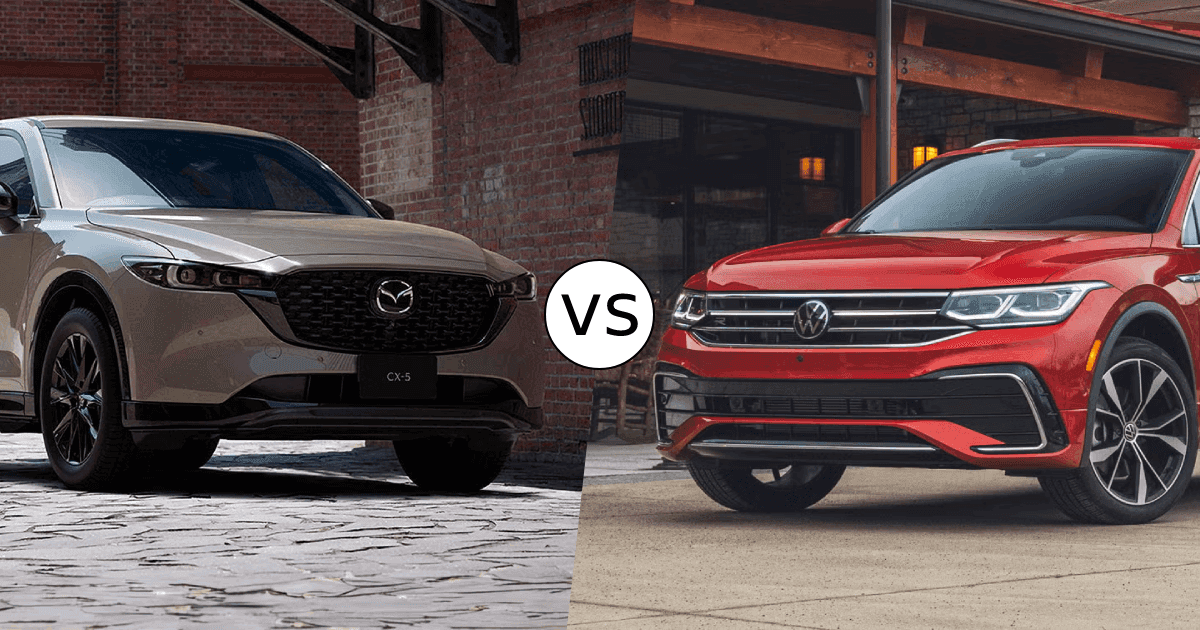
2026 Mazda CX-5 vs 2026 Volkswagen Tiguan
Picking between the 2026 Mazda CX-5 and 2026 Volkswagen Tiguan really comes down to figuring out what matters most in your daily routine. The CX-5 brings crisp handling, standard all-wheel drive, and an interior that feels way more expensive than it is. Meanwhile, the Tiguan counters with more horsepower, roomier back seats, and tech features that cover all the bases.
This head-to-head reveals two completely different approaches to building compact SUVs. You’re basically choosing between driving fun with built-in AWD capability versus maximum family space and turbocharged grunt. Both earn solid marks, just through totally different strategies.
At Capistrano Mazda, we help shoppers work through these decisions with honest information and test drives that show how each SUV actually behaves on real roads. We encourage you to explore our 2026 CX-5 inventory and feel the differences yourself.
Pricing and Value Comparison
The 2026 Volkswagen Tiguan usually starts with a higher sticker price than the CX-5, which reflects Volkswagen’s strategy of packing more standard equipment into base models. The CX-5 gets you in the door for less while still including serious safety tech and quality cabin materials. If you’re watching your budget closely, this gap definitely matters.
But here’s the thing about the Tiguan’s pricing: you’re paying for more built-in technology and space right from the start. Volkswagen also gives you more trim variations to choose from, so you can dial in exactly what you want (though upper trims can get pricey fast). The CX-5 keeps things simpler with fewer trim levels, which honestly makes choosing easier.
When it comes to holding value down the road, these two take different paths. The CX-5 stays strong thanks to Mazda’s solid reputation for reliability and reasonable maintenance costs. The Tiguan’s sturdy build quality and Volkswagen’s brand recognition help it maintain decent resale numbers too.
Trim Level Breakdown
CX-5 trim levels start with surprisingly well-equipped base models that include modern safety systems, comfortable seats, and controls that make sense. Move up and you’ll find leather, premium audio, and refined details. Top CX-5 models deliver an almost luxury experience with materials that rival much pricier brands.
The Tiguan lineup follows a similar pattern but offers more ways to customize. Base versions handle the essentials well, while higher trims bring panoramic sunroofs, advanced driver aids, and bigger screens.
Cost of Ownership Considerations
The CX-5 typically sips less fuel, which adds up over time whether you’re commuting or taking weekend trips. Mazda service tends to cost a bit less than Volkswagen maintenance too. Insurance rates depend on which trim you pick and your driving record, but both stay reasonable for this class.
Volkswagen usually provides longer warranty coverage than Mazda, which gives you extra peace of mind. That extended protection can help offset the higher upfront costs. Both brands include roadside assistance and some free maintenance to get you started.
Performance and Driving Experience
The performance story here shows two distinct personalities. The CX-5 feels alert and connected, with steering that actually tells you what’s happening and suspension that’s tuned for engagement without beating you up. It stays composed through corners, making everyday driving more engaging.
The Tiguan’s turbocharged engine delivers a solid punch, especially when you’re merging onto highways or passing slower traffic. That low-end torque makes acceleration feel effortless around town. The Tiguan’s setup focuses on comfort over sportiness, creating smooth rides that passengers really appreciate. Both offer AWD, though with different approaches to availability and tuning.
Engine Power and Efficiency
| Specification | 2026 Mazda CX-5 | 2026 Volkswagen Tiguan |
| Standard Engine | 2.5L inline-4, 187 hp, 185 lb-ft | 2.0L turbo inline-4, 201 hp, 207 (FWD)/221(AWD) lb-ft |
| Optional Engine | Not available at launch | 2.0L turbo, 268 hp, 258 lb-ft |
| Transmission | 6-speed automatic | 8-speed automatic |
| Drivetrain | i-Activ AWD standard | FWD standard, 4MOTION AWD optional |
| Fuel Economy (City/Hwy/Comb) | 24/30/26 MPG | 25-26/32-34/28-29 MPG (FWD) or 22/29-30/25 MPG (AWD) |
| Towing Capacity | 2,000 lbs (properly equipped) | 1,500 lbs (FWD) / 1,800 lbs (AWD) |
The Tiguan’s turbo setup puts out more horsepower and torque than the CX-5’s naturally aspirated engine. You’ll notice this power advantage during spirited driving or when you’ve got the SUV loaded with gear. That extra performance does hurt fuel economy though, especially if you go with the 4MOTION AWD.
The CX-5’s engine focuses on efficiency while still providing enough performance for most situations. Power delivery stays smooth and predictable, which is great in stop-and-go traffic or when you’re navigating tight San Juan Capistrano parking lots. Real-world fuel consumption usually favors the Mazda, particularly in city driving. The CX-5’s standard i-Activ AWD gives you year-round confidence without the fuel penalty you’d get from FWD-only competitors.
If you’re planning to tow weekend toys, the CX-5’s 2,000-pound capacity handles small trailers, jet skis, or camping gear better than the Tiguan’s 1,500-1,800 pound limits.
Handling and Ride Quality
The CX-5’s suspension creates a sporty character that enthusiasts love. Body control stays tight during direction changes, building confidence on twisty roads. Steering weight feels just right, giving you feedback without being heavy. This setup makes the CX-5 feel more nimble than its size suggests, with a tight 36.0-foot turning circle that beats the Tiguan’s 38.1-foot circle for parking and U-turns.
The Tiguan prioritizes passenger comfort with softer suspension tuning. It soaks up road imperfections and rough pavement well, keeping the cabin quiet. Steering feels lighter and less talkative, which many people prefer for relaxed cruising. Neither approach is better or worse; they just serve different driving preferences.
Interior Design and Comfort
These SUVs create very different cabin vibes. The CX-5’s interior uses premium materials and thoughtful design to create an upscale feel. Dashboard surfaces feel substantial, with controls placed where they make sense. The driver-focused layout puts key functions within easy reach. Mazda’s attention to detail honestly competes with luxury brands.
The Tiguan’s cabin emphasizes practicality alongside quality. Materials feel durable and well-put-together, built for family life. The dashboard provides clear views of displays and logical button placement. Volkswagen includes smart storage solutions throughout. While it doesn’t quite match the CX-5’s premium atmosphere, the Tiguan remains comfortable and purposeful.
Cabin Quality and Materials
The CX-5 spreads soft-touch surfaces generously, creating an expensive feel. Dashboard padding, door panels, and center console all convey quality. Stitching details and trim pieces add visual interest without going overboard. Even base models get materials that many competitors save for higher trims.
The Tiguan uses tough materials that balance quality with everyday durability. You’ll find hard plastics in lower areas, but they feel solid rather than cheap. Upper surfaces use softer materials that enhance the premium impression. Both SUVs avoid rattles and squeaks, maintaining structural integrity over time.
Passenger and Cargo Space
| Dimension | 2026 Mazda CX-5 | 2026 Volkswagen Tiguan |
| Seating Capacity | 5 | 5 |
| Length | 184.6 in. | 184.4 in. |
| Wheelbase | 110.7 in. | 109.9 in. |
| Turning Circle | 36.0 ft | 38.1 ft |
| Ground Clearance | 7.6 in. | 6.6-7.0 in. |
| Cargo (Behind Rear Seats) | ~20+ cu. ft. | 33.8 cu. ft. |
| Max Cargo (Seats Down) | 71+ cu. ft. | 69.8 cu. ft. |
| Curb Weight | 3,300-3,700 lbs | 3,563-4,010 lbs |
The Tiguan clearly wins on rear-seat legroom, with those extra inches making a real difference for growing families or taller passengers. Adults can settle into back seats comfortably for long drives. Behind the rear seats, the Tiguan offers 33.8 cubic feet versus the CX-5’s roughly 20 cubic feet.
But the CX-5 fights back with better maximum cargo capacity when you fold the rear seats down, giving you over 71 cubic feet versus the Tiguan’s 69.8 cubic feet. This advantage helps on weekend trips and when hauling large items. The CX-5 provides adequate space for most real-world situations, with front passengers getting plenty of room and rear seats handling average-height adults comfortably.
Technology and Infotainment Features
The Tiguan typically comes with larger touchscreen displays that have sharper graphics and quicker response times. Current Volkswagen infotainment includes wireless smartphone connectivity for seamless integration. Navigation screens stay clear and readable with menu structures that make sense. Voice commands work reliably for most tasks. Multiple USB ports keep everyone’s devices charged. Available features include 30-color ambient lighting and massaging seats on upper trims.
The CX-5’s infotainment focuses on simplicity and ease of use. That rotary controller lets you operate things without touching the screen, which cuts down on driver distraction. Display graphics stay clean and easy to read, though screens run smaller than the Tiguan’s. Available setups include a 15.6-inch center touchscreen with Google built-in (free for the first year). Smartphone integration works well with both major platforms. Audio systems in both deliver quality sound, with premium upgrades available on higher trims.
The Tiguan includes more standard tech features earlier in its lineup. Things like wireless charging, Digital Cockpit Pro, and advanced connectivity show up on lower trims. The CX-5 saves some technology for upper trims but gives you solid basics across all models. If you want to compare tech features in person, you can apply for financing to get the ownership process started.
Safety Ratings and Driver Assistance
Both vehicles earn strong ratings from safety testing organizations. The Tiguan often includes a more complete suite of driver assistance features as standard equipment. Adaptive cruise control, lane-keeping assistance, and automatic emergency braking work together smoothly. Blind-spot monitoring and rear cross-traffic alerts boost confidence during lane changes and backing up.
The CX-5 matches most features, though availability changes by trim level. Mazda’s systems work smoothly without feeling intrusive or overly cautious. Both SUVs include multiple airbags and strong body structures that protect occupants. Advanced lighting systems improve nighttime visibility, contributing to solid safety credentials that work well for family use.
Which Compact SUV Wins?
Our Verdict
The 2026 Mazda CX-5 versus 2026 Volkswagen Tiguan comparison doesn’t have a clear winner for everyone. Your best choice depends on what you prioritize in a compact SUV. The CX-5 works for drivers who value engaging handling, upscale cabins, standard AWD, and better towing capacity. Its driving dynamics and premium touches appeal to people who actually enjoy the act of driving.
The Tiguan makes sense for buyers who need maximum rear-seat space, higher horsepower, and comprehensive tech features. Families appreciate that extra room, while tech lovers value the advanced features. Its smooth ride quality really shines on road trips.
Experience the Difference
At Capistrano Mazda, our team helps you experience these differences directly. We encourage extended test drives that go beyond quick dealership loops. Bring your family, load some cargo, and drive routes that match your actual patterns around San Juan Capistrano and Southern California. This hands-on approach reveals which SUV truly fits your lifestyle.
Browse our new Mazda inventory or contact our team at (833) 753-0710. Visit us at 32852 Valle Rd, San Juan Capistrano, CA 92675 to schedule your comparison drive. Our straightforward approach helps you make confident decisions without any pressure.
0 comment(s) so far on 2026 Mazda CX-5 vs 2026 Volkswagen Tiguan