



Why the MX-5 Miata Is Still the World’s Best Sports Car at Any Price
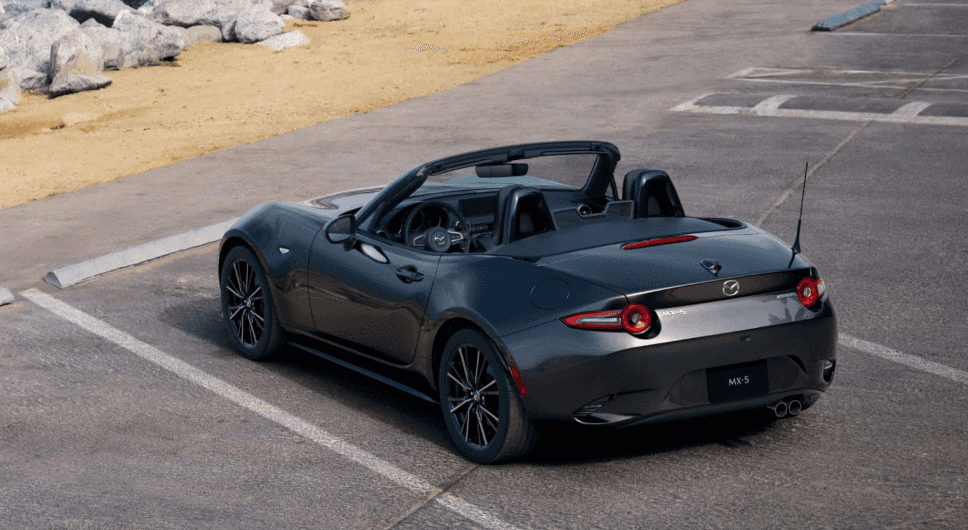
Ask any driving enthusiast to name the best sports car of all time, and the Mazda MX-5 Miata comes up in nearly every conversation. It has never been the most powerful car on the road. Turns out that’s the whole appeal. We’ve sold and serviced these cars long enough at Capistrano Mazda to know why so many Southern California drivers keep coming back to the MX-5 Miata generation after generation. It’s a car built around a simple idea: driving should feel good, not just go fast.
Why the Mazda MX-5 Miata Remains the Ultimate Entry-Level Sports Car
A Mazda Miata is arguably the purest sports car still in production. Since its 1989 launch for the 1990 model year, the MX-5 Miata has held onto a rear-wheel-drive, front-engine, two-seat convertible layout that prioritizes balance and feedback over brute force. That consistency helped it become the best-selling sports car of all time. People don’t just like Miatas because they’re affordable. They like them because the car rewards good driving on a canyon road the same way it does on a daily commute through Orange County traffic.
The Miata Philosophy: Lightweight Simplicity Over Raw Power
Mazda engineers built the whole car around a single Japanese phrase, and once you know it, everything about the Miata’s design starts to make sense.
Jinba Ittai: Horse and Rider as One
Mazda’s engineers describe the Miata’s design goal as jinba ittai, meaning “horse and rider as one.” Tetsu Kasahara first articulated the concept in 1987 during the original MX-5’s development, and it’s remained the guiding principle through every generation since. The original NA, the later NB and NC, and today’s ND all chase the same target: a car that responds so naturally to driver input it feels like an extension of the body rather than a machine you’re operating.
Why Less Weight Beats More Horsepower
Weight, not horsepower, has always been the Miata’s real performance metric. Early NA models weighed around 2,100 lbs, and even today’s ND generation tips the scales at roughly 2,500 lbs for the RF, with the manual soft-top Grand Touring trim coming in near 2,368 lbs.
The current 2.0L Skyactiv-G four-cylinder produces 181 hp and 151 lb-ft of torque, numbers that sound modest next to rivals, but paired with that low curb weight, the power-to-weight ratio makes the car feel eager rather than underpowered. That’s the mechanical foundation behind the “slow car fast” philosophy that defines the entire Miata experience.
Behind the Wheel: The Driving Experience That Sets It Apart
Numbers only tell part of the story. What makes the Miata memorable happens in the corners.
Chassis Balance and Steering Feel
The ND generation carries near-perfect front-to-rear weight balance, a revised low-friction steering rack, and an asymmetric limited-slip differential that stabilizes turn-in through fast direction changes. Double-wishbone front and multi-link rear suspension, tuned with Bilstein dampers and riding on 205/45/17 tires, keep body motions controlled without making the ride feel harsh. On a twisty Southern California road, that translates to a car that communicates exactly what the tires are doing at any given moment.
The Manual Gearbox Advantage
A six-speed manual is standard, and for good reason. The shifter has short, precise throws that make rev-matching and heel-toe downshifts satisfying rather than intimidating. Grand Touring buyers can opt for an automatic on both the soft-top and RF, but the manual remains the enthusiast’s choice and the version most associated with Miata racing and grassroots motorsports, where the car’s low weight and forgiving chassis make it one of the most popular platforms for club racing and time attack events.
Soft-Top vs. RF Hardtop Options
Buyers choose between two distinct personalities. The soft-top uses a manually operated cloth roof that drops in seconds with one hand, keeping the car light and simple. The MX-5 Miata RF offers an electrically retractable fastback roof that opens in about 13 seconds, with styling that nods to 1960s roadsters. The RF Club trim adds 17-inch BBS wheels for a more aggressive stance. Neither option changes the car’s driving character much; it’s simply a matter of open-air simplicity versus a touch more refinement and structure.
MX-5 vs. the Competition: Value and Fun Per Dollar
When people search for Mazda MX-5 competitors, three names come up consistently: the Toyota GR86, Subaru BRZ, and pricier options like the BMW Z4 and Porsche 718 Boxster. Each is a genuinely good car, and comparing them helps explain what makes the Miata’s approach distinct.
| Model | Curb Weight | Horsepower | 0-60 mph | Combined MPG | Driving Character |
|---|---|---|---|---|---|
| MX-5 Miata | ~2,368 lbs | 181 hp | 6.4 sec (manual) | 29 MPG | Lightweight, balanced, top-down engagement |
| Toyota GR86 / Subaru BRZ | ~2,811-2,851 lbs | 228 hp | 5.4-6.1 sec (manual) | 22 MPG | Boxer-engine torque, coupe rigidity |
| BMW Z4 sDrive30i | ~3,300 lbs | 255 hp / 295 lb-ft | 5.2 sec | 28 MPG | Comfort-oriented turbo convertible |
| Porsche 718 Boxster (base) | Heavier | 300 hp | 4.7 sec | ~22 MPG | Mid-engine precision, higher price tier |
Mazda MX-5 vs. Toyota GR86/Subaru BRZ
The GR86 and BRZ share a 2.4L boxer engine producing 228 hp, more power than the Miata, and independent testing shows the manual GR86/BRZ twins reaching 60 mph in about 6.1 seconds, while Edmunds clocked the manual Miata at 6.4 seconds. But the Miata counters with a retractable top neither competitor offers, a lower price of entry, and better fuel economy at 29 MPG combined versus roughly 22 MPG for the boxer-engine twins. The GR86 and BRZ might win a stoplight drag race, but the Miata is the one that makes you smile driving to the coast.
Mazda MX-5 vs. Premium Roadsters (BMW Z4, Porsche 718 Boxster)
Step up to the BMW Z4 sDrive30i and you get 255 hp and 295 lb-ft of torque from a turbocharged 2.0L, plus a genuinely comfortable, well-equipped convertible experience, though it leans more toward relaxed cruising than raw sports car engagement.
The Porsche 718 Boxster pushes further with 300 hp, a 4.7-second 0-60 time, and the mid-engine balance Porsche is famous for, but it asks for a significantly higher price tier and a coarser turbocharged engine note than the Miata’s naturally revving four-cylinder. Both are excellent machines. The Miata simply asks less of your budget while still delivering the same fundamental joy of open-top rear-wheel-drive handling.
Why ‘Slow Car Fast’ Wins Over ‘Fast Car Slow’
Engagement comes from the connection between driver, machine, and road rather than a horsepower figure on a spec sheet, and that’s really the source of the Miata’s standing among the greatest sports cars ever built. A low-power manual car pushed to its limit on a canyon road often feels more thrilling than a high-power car cruising well under its capability. That’s the “slow car fast” idea, and it’s why the Miata continues to outsell and outlast rivals that look better on paper.
Addressing Common Buyer Concerns
Is It Too Small or Underpowered?
At 154.1 inches long, 48.6 inches tall, and 68.3 inches wide, the Miata is genuinely compact, and its two-seat layout won’t suit everyone’s needs. But 37.4 inches of headroom and 43.1 inches of legroom mean most drivers fit comfortably, and the 181-hp Skyactiv-G engine, paired with the car’s light weight, provides plenty of usable power for spirited driving and daily commuting alike.
Practicality: Cargo and Daily Usability
Cargo space tops out at 4.6 cu ft, enough for a couple of soft bags or a grocery run, though it’s not a car built for hauling. Standard safety tech, including automatic emergency braking, blind-spot monitoring, and lane departure warning, plus an 8.8-inch display with Apple CarPlay, Android Auto, dual USB-C ports, and Amazon Alexa integration, means the small footprint doesn’t come at the cost of a modern, comfortable daily driving experience.
Real-World Value: Ownership Costs Compared
Purchase Price and Depreciation
If you’ve wondered why Miatas are relatively affordable to own long-term, resale value is a big part of the answer. According to iSeeCars, the MX-5 Miata retains 69.2% of its value after five years, the best resale performance of any Mazda model, with the RF close behind at 67.9%. That kind of retention means lower long-term ownership costs compared to many competitors.
Fuel Economy, Maintenance, and Reliability
The manual Miata returns 26 city/34 highway/29 combined MPG, while the automatic edges slightly higher on the highway at 35 MPG. iSeeCars data shows the average MX-5 Miata lasts about 116,008 miles, or roughly 16.8 years, with an 8.8/10 reliability rating. It sits at #1 of 11 Most Reliable Sports Cars and also tops the charts as the Most Reliable Convertible and the Most Reliable Sports Car Under $30k.
J.D. Power also notes the Miata’s reputation for Japanese-build reliability, a welcome contrast to the electrical quirks that plagued earlier British and Italian roadsters. Mazda backs every new MX-5 Miata with a 36-month/36,000-mile New-Vehicle Limited Warranty and a 60-month/60,000-mile Powertrain Limited Warranty.
Our service center handles factory-recommended maintenance with Mazda-trained technicians and genuine parts, whether you’re commuting daily or tracking your car on weekends.
Why Buy Your MX-5 Miata at Capistrano Mazda
Exploring New MX-5 Models in Stock
We keep a rotating selection of new MX-5 Miata models on our lot in San Juan Capistrano: soft-top Sport and Club trims, plus Grand Touring models with the automatic option. If you’re weighing the MX-5 Miata RF against the classic soft-top, our sales team can walk you through both in person. You can also browse our full new vehicle inventory online before you visit.
Financing and Special Offers
Our in-house finance department works to make the buying process straightforward, whether you’re financing a new MX-5 Miata or exploring our certified pre-owned vehicles. We’re transparent through every step, and we’re happy to talk through options that fit your budget without pressure.
The Verdict: Experience the World’s Best Sports Car Today
The Miata has never needed to win on horsepower to earn its reputation as the best sports car of all time. It wins on balance, feedback, and the simple joy of driving a well-tuned car on a good road. If you’re ready to see why the MX-5 Miata is still the world’s best sports car at any price, reach out to our team to schedule a test drive. Our sales line is (833) 753-0710, and we’re open Monday through Friday 8 AM to 7 PM, Saturday 9 AM to 7 PM, and Sunday 10 AM to 6 PM.
0 comment(s) so far on Why the MX-5 Miata Is Still the World’s Best Sports Car at Any Price